Calms the nervous system
Sustained, harmonic tones invite the body out of fight-or-flight and into the parasympathetic state where digestion, repair, and rest occur.
A quiet guide to one of the oldest and gentlest healing practices, how it works on the body, where these traditions fit in, and what to expect from your first session.
A sound bath is a meditative experience in which you lie down and let waves of sound wash over you. There is nothing to perform, learn, or follow. Instruments such as singing bowls, gongs, chimes, and the human voice create long, overlapping tones that the body can rest inside, the way it might rest inside warm water.
Sound has been used as medicine for thousands of years , from the chanted mantras of ancient temples to the drone-based music of contemplative traditions. Modern science now describes what these traditions long understood: that slow, harmonic sound shifts the nervous system into a deeper, more restorative state.
Sustained, harmonic tones invite the body out of fight-or-flight and into the parasympathetic state where digestion, repair, and rest occur.
As the ear entrains to long sound waves, the breath naturally lengthens, lowering heart rate and quieting the inner monologue.
Vibration moves through the body's fluids and tissues, gently loosening areas of physical and emotional holding without effort or analysis.
Sound bypasses language. Feelings that resist being named can surface, soften, and move through without needing to be explained.
After a session, many people describe a quiet, spacious quality of mind, closer to meditation than to ordinary rest.
Regular sound bath practice is often linked with falling asleep more easily and waking less during the night.
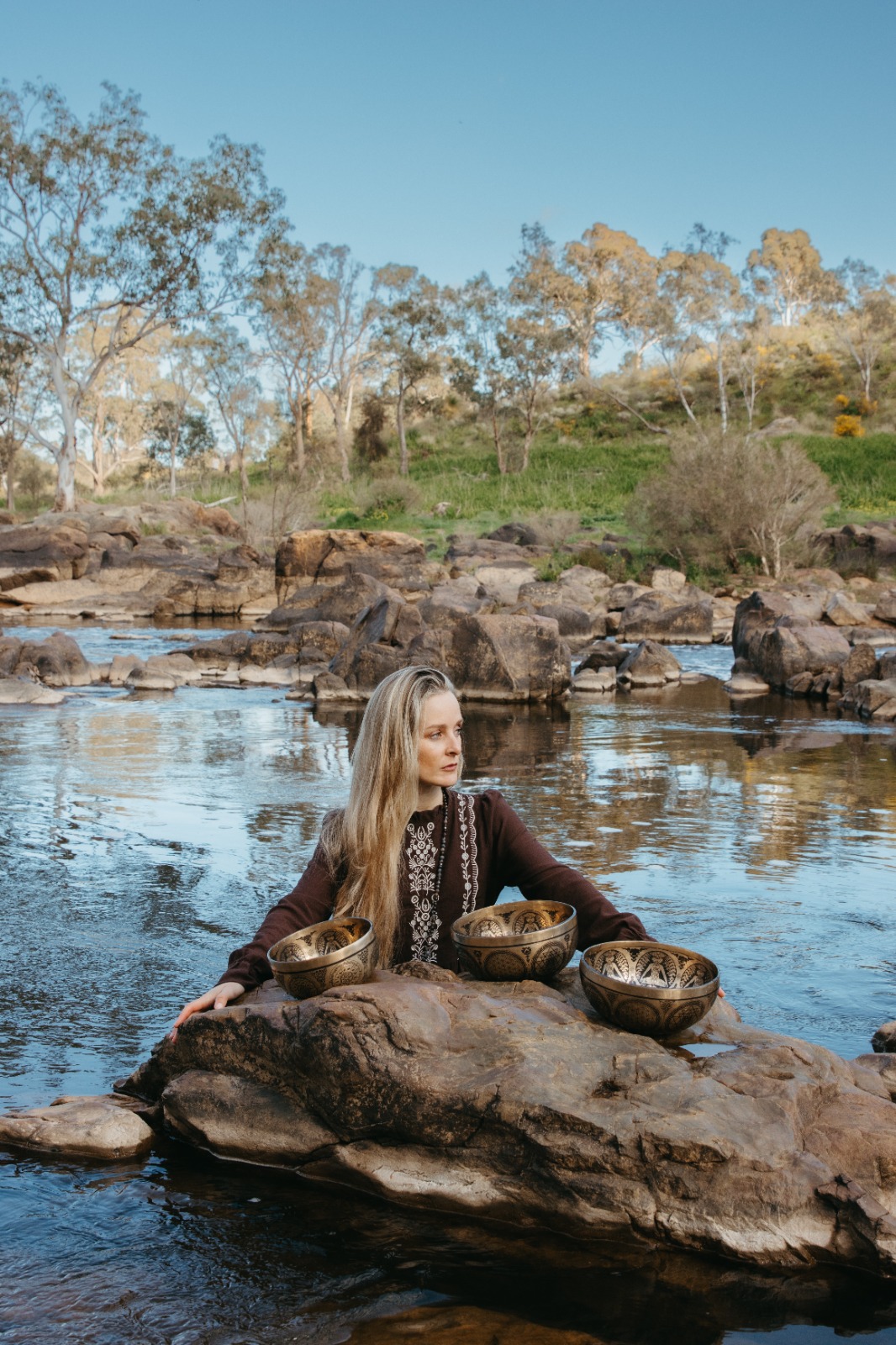
Solura's work is woven from three ancient threads: the grounding shamanic rhythms and drums of Africa, the wild, tender rhythms and beats of the Celtic lineage, and the devotional mantra, shruti box and harmonium of India.
Rather than reaching for a generic state of relaxation, the session is shaped intuitively to meet what the room, and your body, are actually asking for that day. Singing bowls, vocal toning and ancestral instruments are called in as needed.
The result is a slower, more attentive bath of sound, rooted in centuries of practice, met by the breath of the present moment.
Not every sound offering is the same. At Solura we work with two related forms, both shaped by intention rather than a random sequence of nice noises.
A sound journey is sound-led. The instruments are placed and played in a clear order, so the experience has an arc, an opening, a body, and a return. It is not sold as pure relaxation. Some moments may feel strange or tender, because sound can loosen old patterns before the body finds its ease. The closing matters as much as the opening: everyone is brought back to seated together, and the container is released with care.
A sound ceremony holds all of this, then adds layers. Essential oils, simple visual elements and spoken framing deepen the sensory field. The same shape is there, the same closing, but the experience becomes more immersive.
You do not need any prior experience with meditation, yoga, or music. The only invitation is to arrive, lie down, and let yourself be held by sound.
If sound is calling you, the simplest answer is to come and listen.